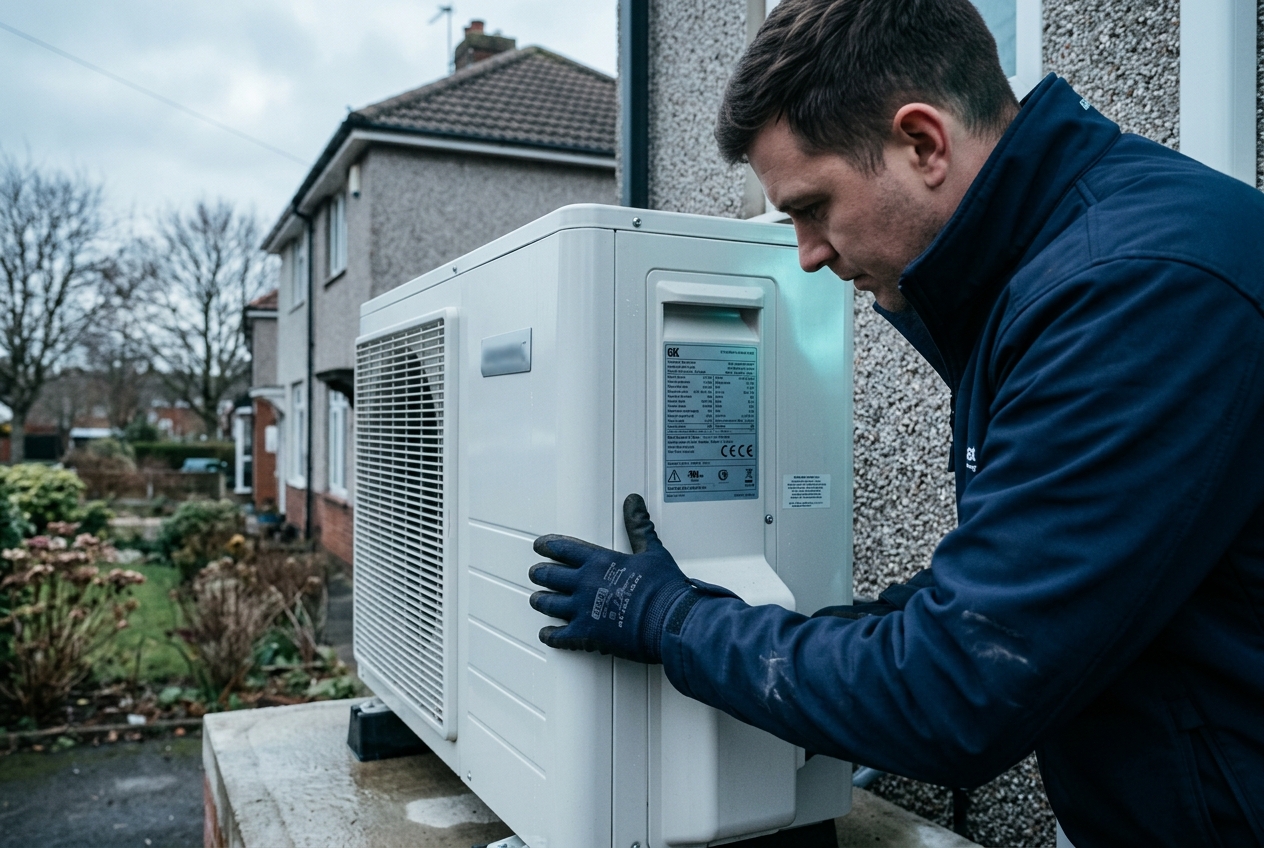
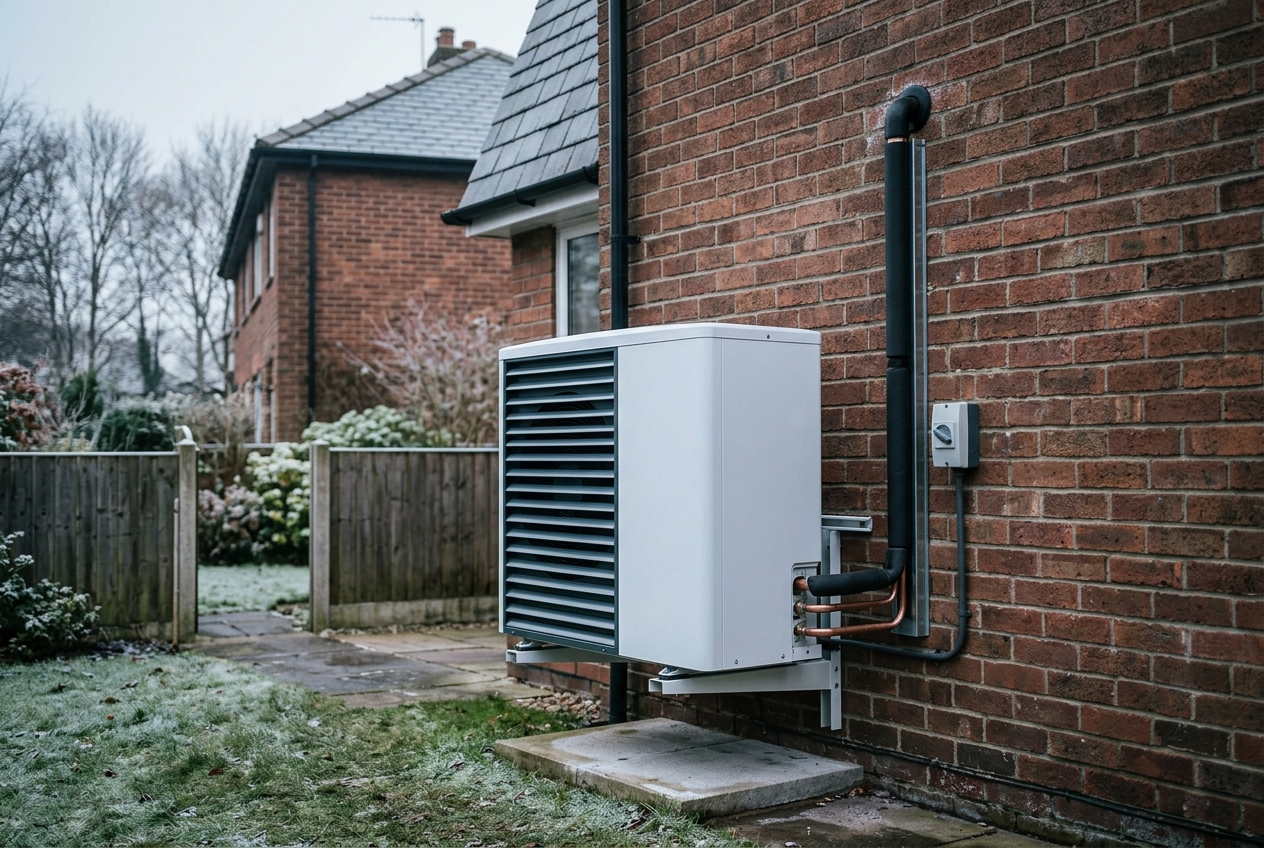
For air-to-water systems (the most common retrofit choice in Greater Manchester), a robust annual visit typically starts with the outdoor unit. The engineer should check the unit's overall condition and confirm there is no damage, then check panels for vibration and tighten fixings where needed. Minimum clearances around the unit matter: if the unit is boxed in, squeezed between a fence and a wall, or routinely blocked by stored items, performance can fall and defrosting can become messy.
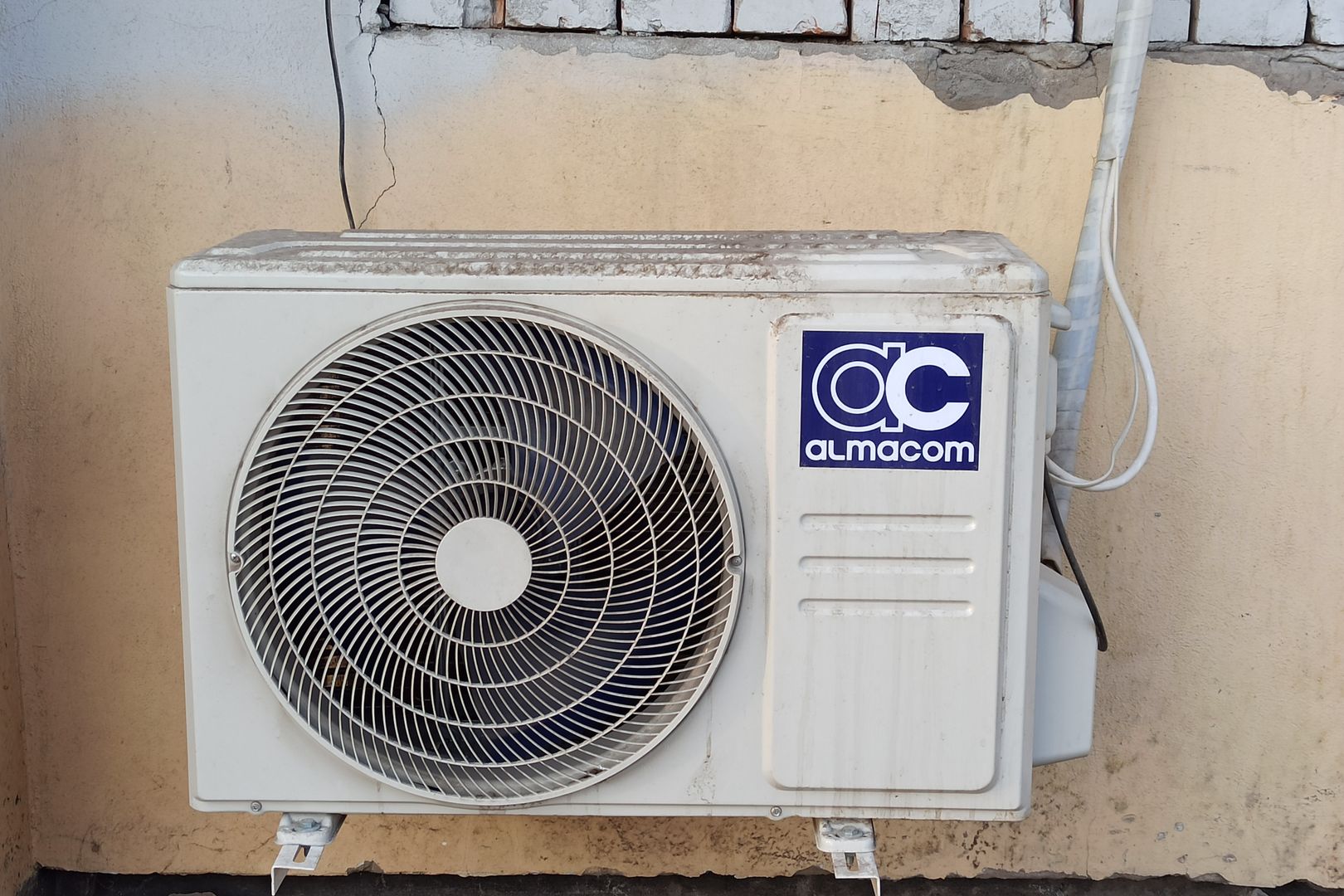
Visual inspection for refrigerant or oil leaks is a key safety and reliability step, and it should be paired with checking electrical grommets and cables for security and damage. Airflow is the heat pump's fuel. A service should include removing obstructions from the evaporator coil and cleaning the coil if required using a suitable proprietary cleaner (and in line with the manufacturer's instructions).
Bent fins reduce airflow; straightening where needed is a practical detail that can make a measurable difference. In Manchester, leaf litter, grass cuttings, road dust and windblown fluff can build up in ways that are hard to spot until you look closely. Condensate management is equally important: drain holes and condensate pipes should be checked and cleared so that water can leave the unit during heating and defrost cycles without pooling, freezing, or finding its way into places it shouldn't.
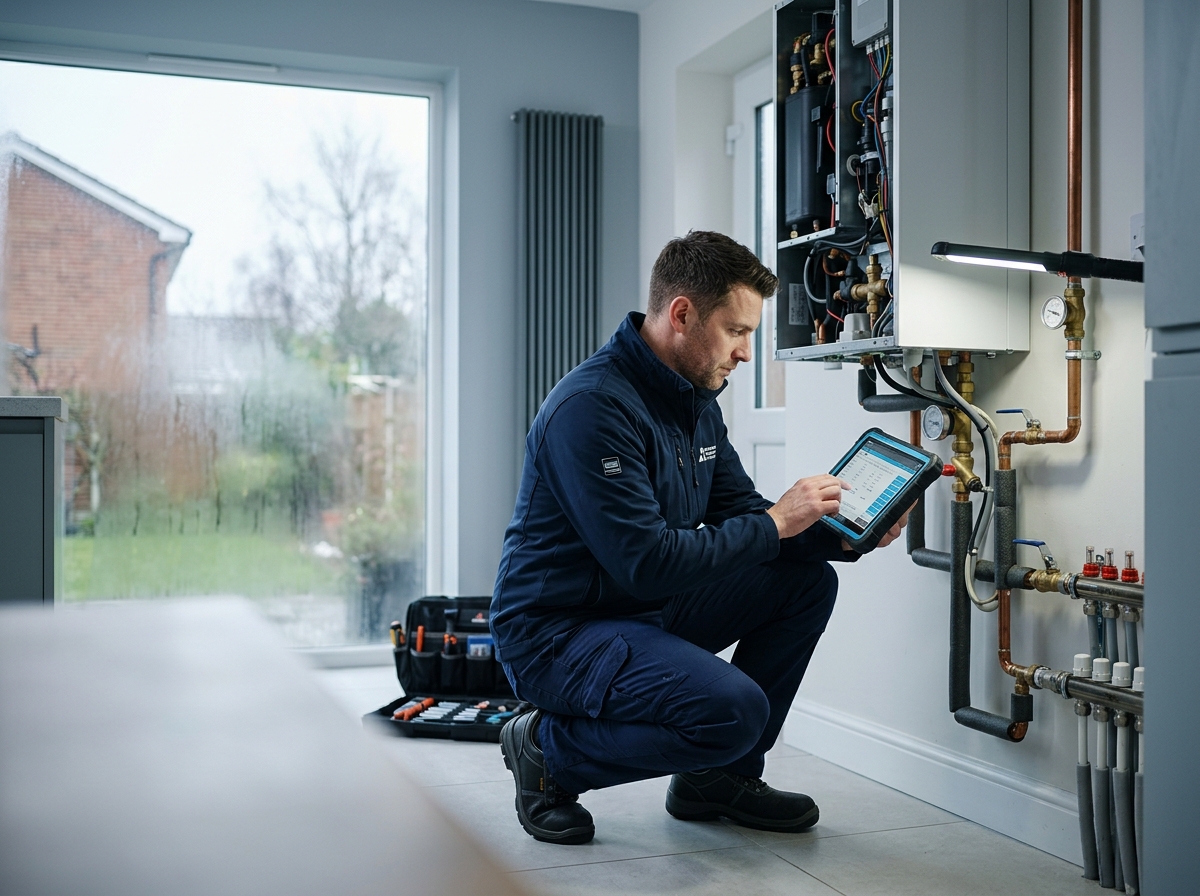
On the indoor side, servicing should treat the heating circuit as a system, not as a collection of parts. External pipe insulation should be checked for damage and gaps—especially on outdoor runs and in cold voids. Flexible hoses (where fitted) should be inspected for condition. Air bleed valves should be checked so that trapped air does not quietly reduce circulation.
Where antifreeze is present (commonly in certain parts of the primary circuit, and in ground loops), levels or devices should be checked. Any filters—including magnetic filters where fitted—should be checked and cleaned. Pressure relief valves and their discharge arrangements should be visually checked, and system pressure should be verified with the expansion vessel charged if required.
A good service also looks for the conditions that cause poor performance, not just the faults that stop the system entirely. If possible, the engineer should confirm primary system flow rate or that the system delta-T meets the minimum requirements. That matters because a heat pump can only move heat effectively when water is moving through the heat emitters properly.
For homes with a domestic hot water cylinder, servicing should not ignore the cylinder simply because the outdoor unit is the visible, expensive part. The cylinder and its safety controls need attention, and building regulation checks (where relevant for the type of cylinder installed) should be validated. Many heat pump systems also use a pasteurisation or purge cycle for hot water hygiene; part of professional care is checking that the necessary controls and safety arrangements are in place and functioning.
Finally, the controller should be checked: time and date correctly set (a surprisingly common issue after power interruptions), fault codes or logs reviewed, and any recurring warnings explained in plain terms.