Skip to content

radiator upgrades: cylinders and system upgrades (UK)

N Northline Heat Pumps 12 min read

Why Your Radiators Matter More Than Ever

Radiator upgrades are one of the most common hidden jobs that determines whether a heat pump retrofit feels effortless or endlessly fiddly. In Greater Manchester—where many homes are solid-wall terraces, post-war semis, or extensions stitched onto older fabric—the heating system you already have can often be reused, but only if the radiators, hot water cylinder and the rest of the pipework and controls are set up for low temperature heating.

A modern boiler is typically happy blasting very hot water through relatively small radiators for short bursts. A heat pump works best the other way around: steady heat, delivered at lower flow temperatures, for longer periods. The headline benefit is efficiency, but the day-to-day benefit is comfort—fewer hot-and-cold swings, less chasing the thermostat, and a home that simply feels evenly warm. The trade-off is that the system has to be designed so that, on the coldest design day, your emitters can still deliver enough heat without pushing temperatures uncomfortably high.

A detail that catches people out is how radiator outputs are quoted. Most manufacturer data is based on a standard test condition, often referred to as ΔT50 under EN 442. That is fine for traditional high-temperature systems, but it can overstate what a radiator will deliver when the system is running cooler. This is why a heat pump survey often flags radiator upgrades even when the radiators look perfectly serviceable: it is about surface area and real output at the temperatures the new system is designed to use.

Start with room-by-room heat loss, not radiator size guesswork. Treat low temperature heating as a design choice, not a setting you flick on. Expect some radiators to stay and some to change—often the coldest rooms first. Plan the hot water cylinder early, because space and pipe routes decide the options. A tidy hydraulic design and proper commissioning matter as much as the heat pump unit.

Practical Takeaways for Real Homes

  • Your existing pipework sizing and condition can be as important as the radiators themselves—microbore runs and partial blockages become critical at lower temperatures.
  • Cylinder location, discharge routing, and maintenance access must be agreed upfront, not discovered when the equipment arrives.
  • Weather compensation and proper balancing deliver steady comfort, but only when emitters are sized to avoid overheating on mild days.
  • System cleaning, inhibitor, and commissioning handover often matter more than the brand of heat pump you choose.
  • Underfloor heating is excellent at low flow temperatures, but retrofit disruption varies hugely.
  • Mixed radiator and underfloor circuits work well when carefully designed to prevent the higher-demand zone dragging temperatures up.

When Do Radiators Actually Need Upgrading?

In many Manchester homes, the answer is not all of them. Bedrooms that already have generously sized double-panel radiators can be fine; small single-panel units in a bay-fronted lounge, an uninsulated rear extension, or a drafty hallway are more likely to be the limiting factor. The right way to decide is a heat-loss calculation by room, then selecting emitters that can cover that load at the system's target temperatures. Current MCS heat pump design guidance expects designers to provide a design using a flow temperature of 55°C or lower, so the question becomes: can the existing radiators meet each room's heat loss at those lower temperatures, or do some rooms need larger emitters?

Radiator upgrade does not always mean replacing every radiator with something huge. It can mean swapping a single-panel for a double-panel convector, increasing the width under a window, adding a second radiator to a large room, or choosing a different style with more output for the same footprint. It can also mean correcting the basics: ensuring lockshield valves are set so radiators heat evenly, fitting or replacing TRVs where appropriate, and checking that the system can deliver the required flow rate without noisy pipes or stubborn air locks.

One common mistake is to focus purely on the radiator itself and ignore the pipework feeding it—if tails are partially blocked, incorrectly sized, or poorly routed, a bigger radiator will not perform as expected. Another frequent decision point is whether to keep a traditional radiator circuit upstairs and use underfloor heating downstairs, or vice versa. Mixed systems can work well, but they need careful design so the lower-temperature circuit is not dragged up in temperature by the higher-demand circuit.

If your home already has microbore pipework—often 8mm or 10mm—it is not automatically a deal-breaker, but it does make proper assessment important: pressure drop, flow rates and balancing become more critical, and any sludge or partial blockages matter more at lower temperatures.

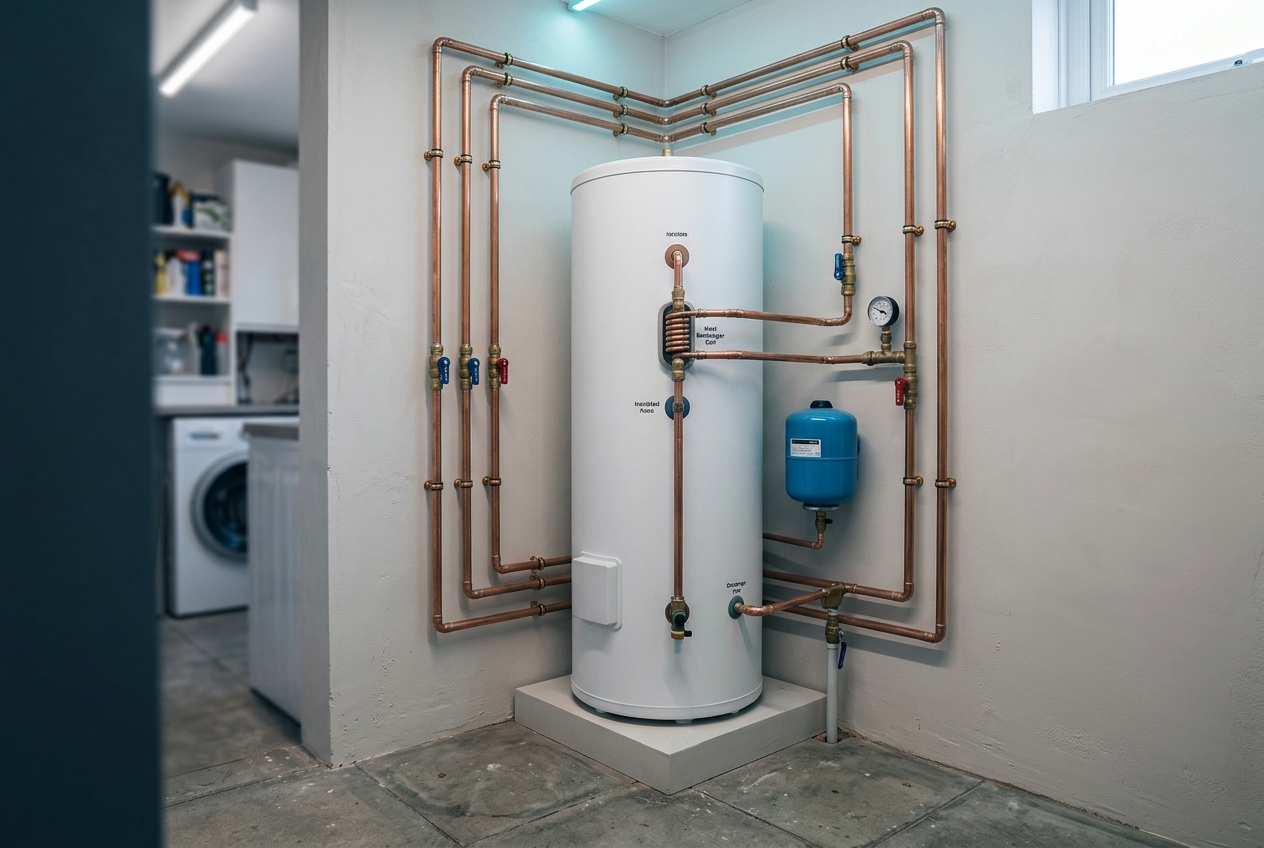
Hot water is the other major piece of the puzzle, particularly if you are coming from a combi boiler. Most heat pump retrofits use a hot water cylinder because it allows the heat pump to heat water efficiently in a controlled cycle, and it avoids the extreme power demand of instant hot water production. A heat pump hot water cylinder typically has a larger heat-exchanger coil area than many older cylinders, because the heat pump is usually heating water at lower temperatures than a boiler would. Many systems also include an immersion heater for top-ups and periodic higher-temperature cycles.

Cylinder choice is not only about litres; it is about how your household uses hot water—showers versus baths, morning peaks versus spread-out demand—mains pressure, and where the cylinder can physically go. Unvented cylinders provide mains-pressure hot water and can give a noticeable improvement in shower performance compared with gravity-fed systems, but they must be installed with the correct safety devices and discharge arrangements. Building regulations guidance for hot water storage systems places strong emphasis on preventing the stored water exceeding 100°C and ensuring any discharge from safety devices is conveyed safely and visibly.

Underfloor heating is often described as made for heat pumps, and in one sense it is: it delivers a lot of heat at low water temperatures because the floor is such a large emitter. Typical wet underfloor systems paired with heat pumps often run with flow temperatures in the 30°C to 45°C range, which supports good efficiency. The complication is retrofit. Some homes can take a low-profile overlay system with modest floor height increase; others need floors lifting, insulation upgrades, doors trimming, skirting adjustments, and new manifold locations.

If you are considering underfloor heating as part of a heat pump change, it is worth being specific about what you want to achieve: quieter operation, freeing wall space from radiators, improving comfort in tiled areas, or simply enabling lower temperatures. Each aim can point to a different level of intervention.

Controls and Hydraulic Layout That Work

Controls and Hydraulic Layout That Work

System Components

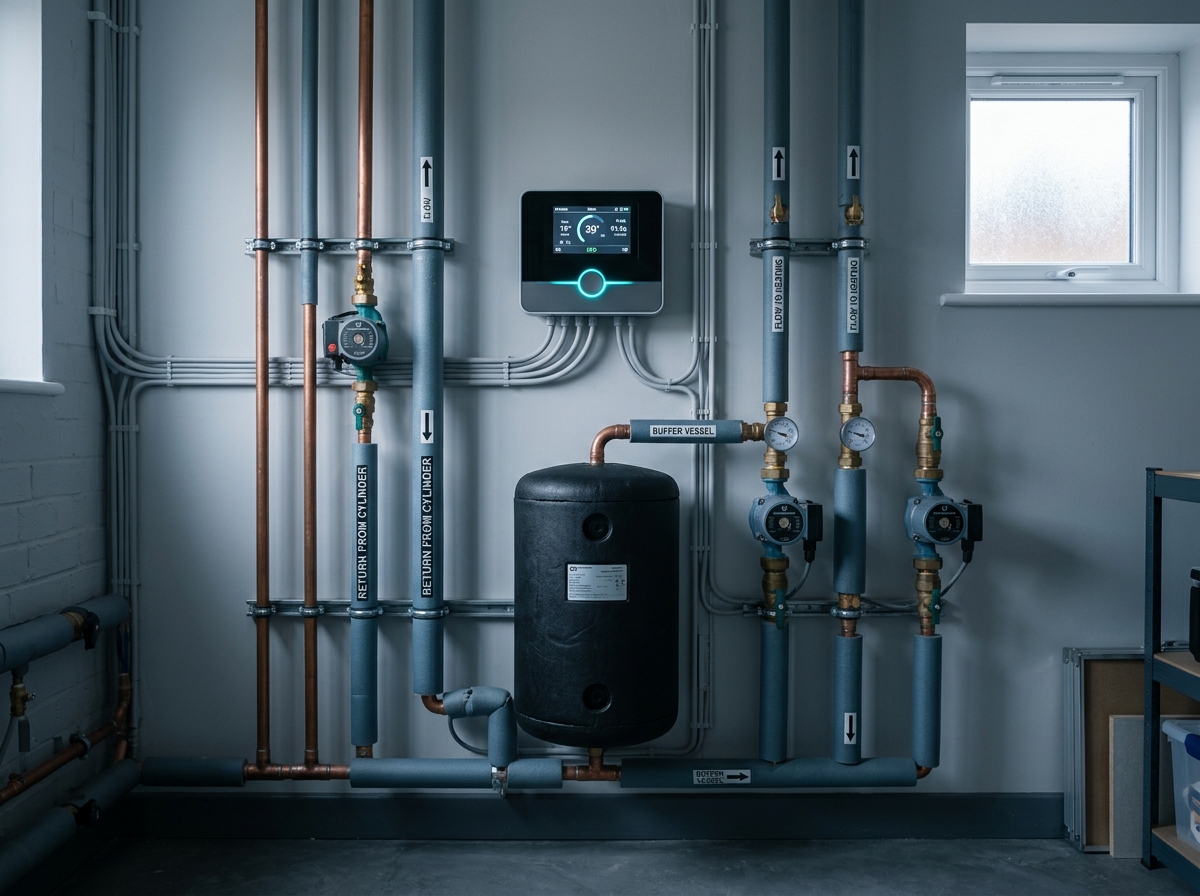
Beyond radiators and cylinders, the system upgrades that matter most are the ones you rarely notice once the job is done: cleaning and water quality, hydraulic layout, and controls. A heat pump needs consistent flow through its primary circuit. Depending on the design, installers may propose a buffer vessel, volumiser or low loss header; these components can solve real problems—such as minimum system volume, flow stability, or separating circuits—but they also add complexity and can reduce efficiency if they are used as a catch-all rather than a targeted solution. The best systems are usually simple: clear separation of primary and secondary circuits where needed, properly sized pipework on the primary runs, sensible zoning, and controls that let the heat pump see demand without short cycling.

Controls are where low temperature heating either shines or frustrates homeowners on a daily basis

Practical Retrofit: A Five-Step Decision Sequence

Treat it as a short sequence of decisions, each one narrowing down the next

A Sensible Retrofit Sequence

A sensible way to approach a retrofit is to treat it as a short sequence of decisions, each one narrowing down the next. This five-step framework helps avoid the pitfalls of picking hardware before you understand what the home actually needs.

Measure and Calculate

Measure and calculate heat loss room by room, including any planned insulation, glazing, or draught-proofing changes. This step gives you the real load each room must meet on the coldest design day. Without this foundation, every downstream decision—radiator sizing, cylinder capacity, heat pump output—becomes guesswork rather than design. Many Manchester homes see significant reductions in calculated heat loss after addressing draughts and improving loft insulation, which in turn reduces the required radiator surface area and can allow lower operating temperatures throughout the system.

Decide Operating Temperatures

Decide the target operating temperatures and emitter plan: keep radiators, upgrade specific rooms, add radiators, and or introduce underfloor heating in selected areas. Current MCS guidance expects a design flow temperature of 55°C or lower, which influences whether existing radiators are adequate or whether larger units are needed in colder rooms. This is also the stage to decide whether mixed emitter types—radiators upstairs, underfloor downstairs—make sense for the layout and budget. The key is to size emitters so they can deliver the required heat at the lower temperatures the heat pump is designed to run, not to rely on cranking the system hotter when it gets cold outside.

Lock in Hot Water Strategy

Lock in the domestic hot water strategy: cylinder type, size, location, discharge route, and whether any existing tanks or pumps are being removed. Cylinder placement often dictates pipe runs and whether gravity-fed or unvented configurations are practical. Unvented cylinders offer mains-pressure hot water and better shower performance, but they require safety discharge pipework that must terminate visibly and safely. Building regulations place strong emphasis on preventing stored water exceeding 100°C and ensuring any discharge is conveyed properly. Get the cylinder location and discharge route agreed early, because moving it later disrupts commissioning and adds cost. Many retrofits stumble when cylinder logistics are left until after the heat pump is chosen.

Hot water cylinder with heat exchanger coil in domestic plant room
Modern heat pump cylinder installations require careful planning for discharge routes and maintenance access

Eight Checks That Prevent Retrofit Surprises

  • Room-by-room heat loss figure provided, not only whole-house total
  • Radiator outputs stated at intended operating temperatures, not catalogue conditions
  • Hot water cylinder plan includes location, discharge route and maintenance access
  • Underfloor heating scope states floor treatment and threshold adjustments
  • Pipework changes described clearly: what is replaced, reused, and why
  • Controls explained in plain language, including weather compensation setup
  • Cleaning and protection specified: flush approach, inhibitor, air removal, balancing
  • Commissioning handover includes what normal low temperature operation looks like
Real Homes

Most Homes Do Not Need Every Element Changed at Once

The reassuring reality is that most homes do not need every element changed at once. The best retrofits focus on the few bottlenecks that force temperatures up: a handful of undersized radiators, a cylinder that is not suited to lower-temperature heat sources, or a control setup that makes the heat pump cycle on and off.

Support Schemes and Real-World Pricing

Costs are understandably front of mind, and it is helpful to separate heat pump costs from system enabling costs. The heat pump radiator upgrade cost in the UK varies because some homes need only a couple of swaps and a balance, while others need pipework rework and several new emitters. As a grounded set of 2026 price ranges that homeowners often see in quotes, these figures are widely used as ballpark guides—your home may fall outside them depending on access, finishes, and how much pipework is altered.

Supply and installation of a standard radiator replacement is commonly priced in the low hundreds. For 2026, published supply-and-fit ranges include around £150–£250 for a single panel radiator and £180–£300 for a double panel radiator; more specialised styles such as column radiators are often quoted higher, around £220–£400, and heated towel radiators around £180–£320. If a radiator needs relocating rather than swapping in place, a typical published ballpark is around £275.

A power flush is sometimes recommended when systems are sludged or performance is uneven. Published 2026 guide prices often range from about £350 to £800 depending on property size and radiator count—for example, around £450 for a two-bedroom house with roughly six radiators, and around £800 for a four-bedroom house with around fifteen radiators. For hot water storage, a published 2026 ballpark for an unvented hot water cylinder supply and installation is roughly £900–£3,500. Guide breakdowns commonly show the cylinder unit itself at around £400–£2,000, with installation labour often quoted around £500–£1,500.

Underfloor heating has a wide spread because floor build-up and finishes dominate the work. Published 2026 guide pricing for retrofit installations often puts electric underfloor heating around £60–£85 per square metre, and wet underfloor heating around £95–£110 per square metre. Where quotes include additional hydraulic components—often described as a buffer tank, volumiser or low loss header—it is common to see them priced as a separate line item rather than bundled, and homeowners should ask what problem it solves in their particular design.

Support schemes can make the overall upgrade more achievable, but the details matter. The Boiler Upgrade Scheme is administered by Ofgem and is installer-led, meaning you apply via an MCS certified installer. From 21 July 2026, the published grant amounts include £7,500 towards an air source heat pump, often described as an air-to-water heat pump, and £7,500 towards a ground source heat pump, with £2,500 available for an air-to-air heat pump and £5,000 for a biomass boiler.

There is also a time-limited additional £1,500 available until March 2027 for an air source or ground source heat pump if the property is heated by oil or LPG and does not have a mains gas connection, taking the heat pump grant to £9,000 in those eligible off-gas-grid cases. The scheme does not support hybrid heat pump systems, such as a gas boiler combined with a heat pump, so if a quote proposes a hybrid arrangement it should be treated as a separate pathway with different funding implications.

If those pieces are addressed—calmly and methodically—the result is a system that is quieter, more even, and easier to live with. The right next step is usually not picking hardware first, but getting the heat loss and emitter plan pinned down, because once you know what your home needs on the coldest day, the choices about radiators, a hot water cylinder, and any broader system upgrades become straightforward and defensible.

Controls That Make Low Temperature Heating Shine

Controls That Make Low Temperature Heating Shine

Weather Compensation

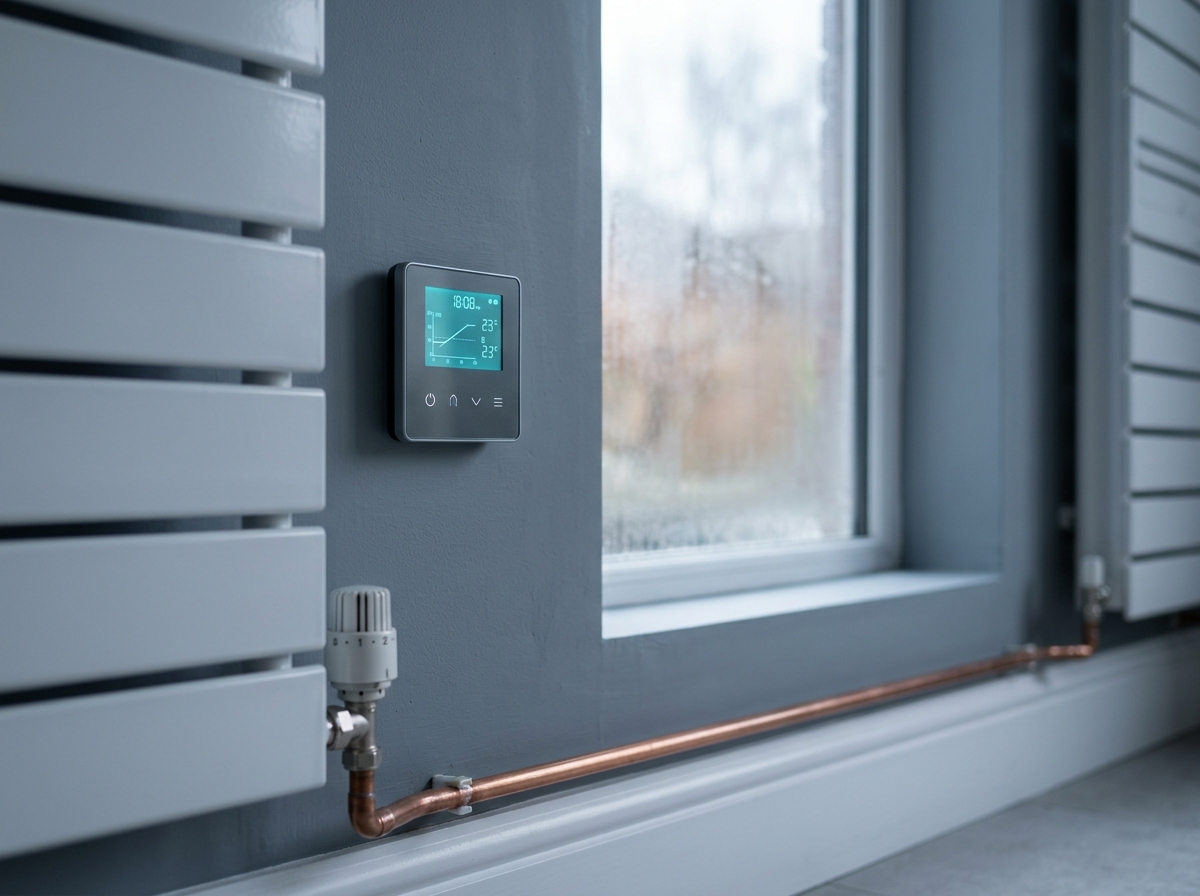
Controls are where low temperature heating either shines or frustrates. Weather compensation—an automatically adjusting flow temperature based on outdoor conditions—is a common route to steady comfort and good performance, but it requires radiators and underfloor circuits to be sized and balanced so rooms do not overheat on mild days or lag behind on cold ones. Room thermostats and TRVs still have a role, but with heat pumps they are often better thought of as fine-tuning tools rather than the main on-off switch. If a system is constantly being forced on and off, it tends to run hotter than necessary, which undermines the point of upgrading.

If a system is constantly forced on and off, it runs hotter than necessary

2026 Guide Prices for Common Upgrades

Single panel radiator Supply and fit, standard size, straightforward swap £150–£250
Double panel radiator Supply and fit, convector type, common residential sizing £180–£300
Column radiator Designer or vertical style, higher output for footprint £220–£400
Radiator relocation Moving existing radiator to new wall position, includes pipework £275
Power flush Varies by property size; £450 for 2-bed, £800 for 4-bed typical £350–£800
Unvented cylinder Supply and installation; unit £400–£2,000, labour £500–£1,500 £900–£3,500
Electric UFH retrofit Per square metre installed, overlay or screeded systems £60–£85/m²
Wet UFH retrofit £95–£110/m²

Published 2026 ballpark ranges; actual quotes vary by access, finishes, and pipework changes

Explore more practical advice on heat pump retrofits, system design, and energy efficiency for Manchester homes